Recognising a heart-shaped face
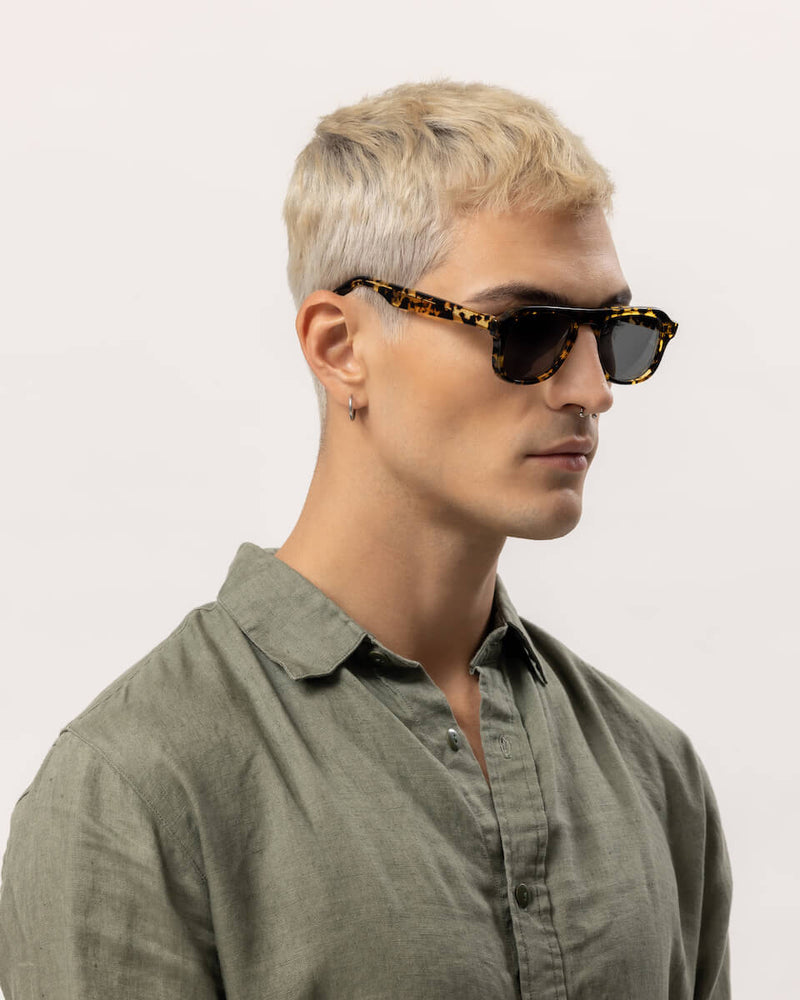
A heart-shaped face is generally broader at the forehead and cheekbones, then narrows towards the chin. A pronounced upper line draws attention towards the eyebrows; a fine outline remains more discreet.
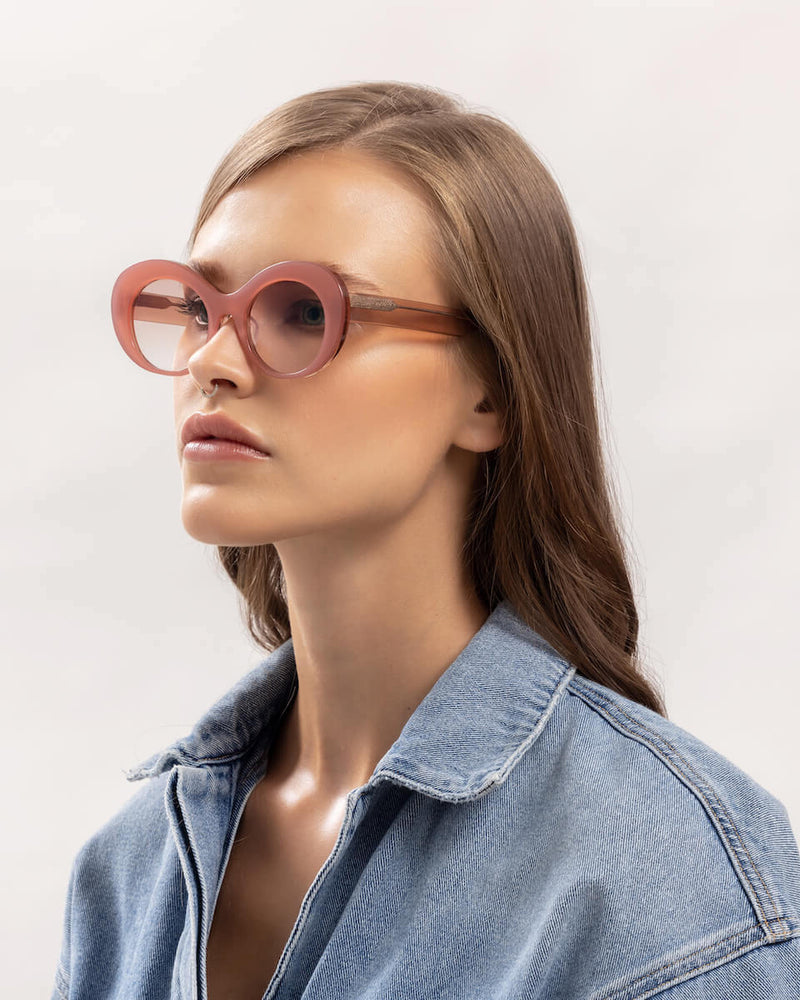
Round or oval lenses bring curves, while deeper lenses add presence towards the cheeks. These proportions let you play with the balance of your face without trying to hide any part of it.

Proportions and visual effects
Look at where the frame has the most presence: above the eyes, at the sides or in its lower half. A fine upper rim with a more rounded or slightly wider lower outline shifts that presence towards the cheeks. Translucent acetate lets more light through than an opaque outline of the same thickness. Compare these details in similar sizes to distinguish their effect from that of a large frame.
Shapes to explore
Round and oval glasses bring curves near the cheeks; a deeper lens adds presence to the lower half of the frame. A gently upswept butterfly shape also offers a broader outline without a heavy upper line.
Fine metal or light, translucent acetate can keep the forehead understated. For sunglasses, compare a deep rounded shape with a compact oval: the visual weight sits in a different place. Choose the balance you like, without treating forehead width as a flaw to hide.

Details to compare
The same oval can look discreet in fine metal and more pronounced with a thick top. Rim thickness therefore helps refine your choice once you have found a shape you like.
When trying frames on, keep their widths similar and compare a discreet upper line with a more pronounced one. You will see more clearly how it changes your expression, without confusing that effect with a difference in size.
Comfort and adjustment
The bridge should support your glasses on your nose without pinching or slipping. With deeper lenses, smile while trying them on to check that the bottom of the frame does not rise on your cheeks. Also check that the temples stay comfortable at the sides and behind your ears: a heart-shaped face alone does not determine these measurements.
Depending on the construction, adjustments may involve the curve of the temples, alignment of the front or the nose pads. We examine the frame before working on it. Tell us where it slips or presses so we can look for the cause.
Choosing your frame
Keep two options you like: a fine oval and a more prominent butterfly, for example. Compare their upper lines and the space they occupy near your cheeks. A pair you wear comfortably can serve as a reference for the bridge and dimensions.
In a boutique, compare shapes on your face and discuss your choice of frame and lenses with an optician. We also check the adjustment of your prescription glasses or sunglasses.